
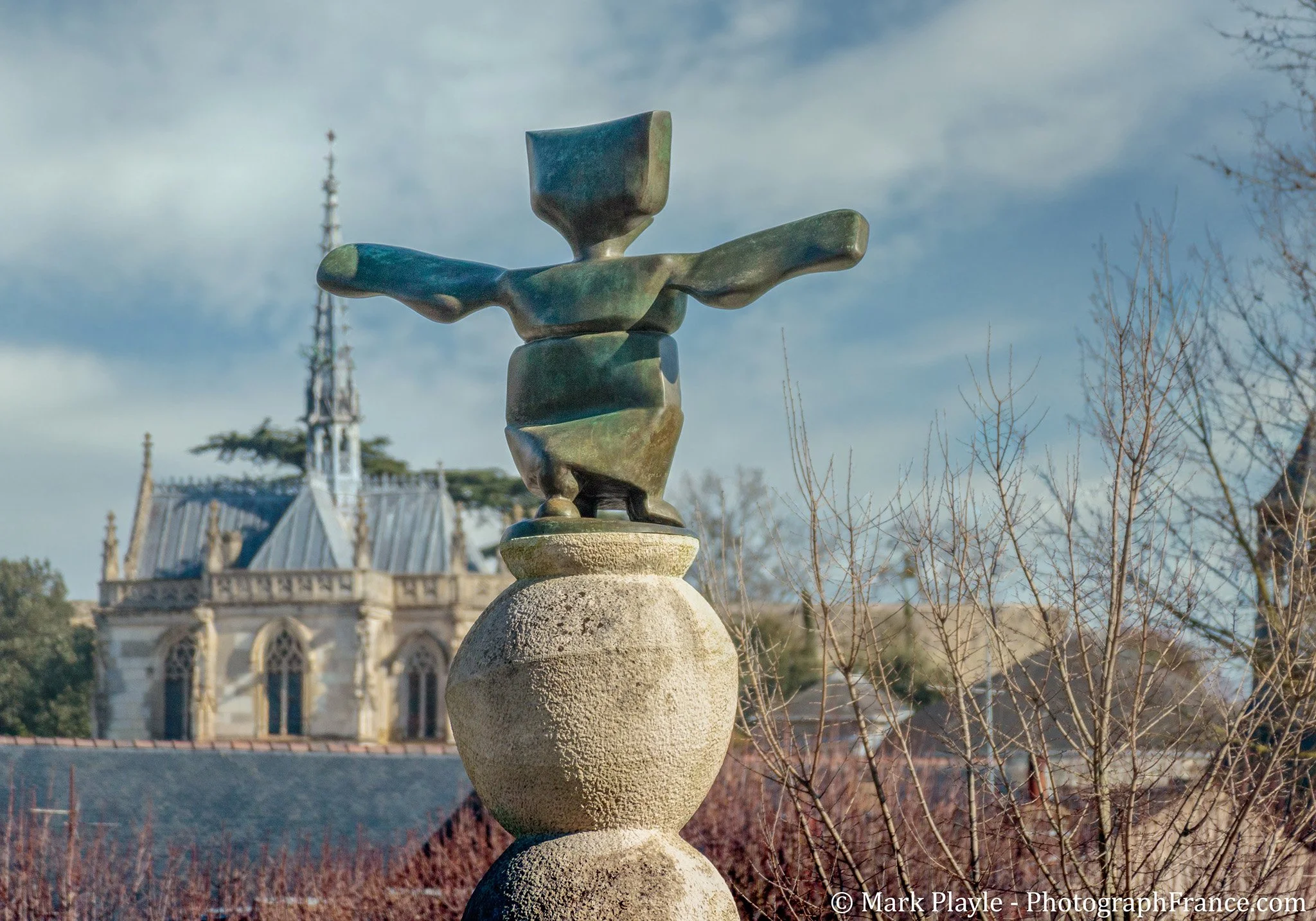
The Max Ernst Fountain Amboise. ©Mark Playle.
It's always gratifying when you find out you are ahead of the curve.
The eminent Sir Christopher Frayling's new book The Hollywood History of Art examines how the cinema industry uses fine art in films.
I wrote about this more than seven years ago in Max Ernst and the Genie of Amboise.
His The Temptation of St. Anthony is a sophisticated example. Ernst kept the canvas for years before selling it. It passed through various galleries until it was bought by the Lehmbruck Museum Duisburg near Düsseldorf Germany.
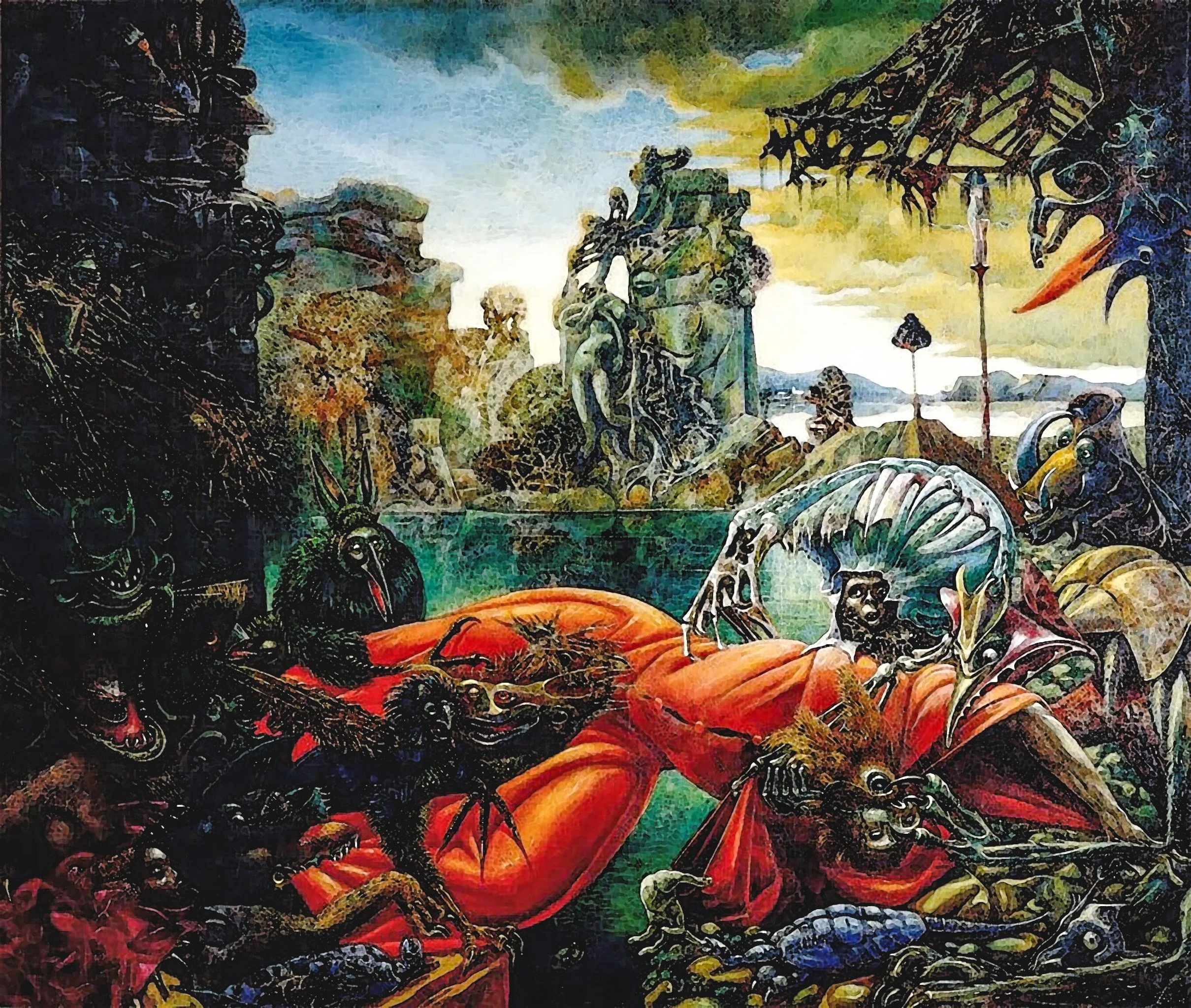
The Temptation of Saint Anthony, 1945 - by Max Ernst.
The painting was the result of an international competition organised by pioneering producer-director Albert Lewin for his 1947 film The Private Affairs of Bel Ami.
For his take on Maupassant's tale of ruthless Parisian social climber Georges Duroy (played by George Sanders), Lewin wanted a painting depicting the spiritual agony of Saint Anthony in the story's climax.
He invited Surrealist artists to submit their versions: Max Ernst, Ivan Le Lorraine Albright, Eugene Berman, Paul Delvaux, Louis Guglielmi, Horace Pippin, Abraham Rattner and Stanley Spencer.
Other contestants included three of Ernst’s lovers, Dorothea Tanning, Leonor Fini and Leonora Carrington and his friend Salvador Dalí.
Each entrant was paid $500. An additional $2,500 prize went to the winner.
Ernst used decalcomania, pouring paint between glass surfaces and pulling them apart to produce chance patterns. He created a nightmare landscape of festering vegetation, jagged rocks, and decaying matter.
The jury, Marcel Duchamp (a close personal friend of Ernst), Alfred H. Barr Jr. of MoMA, and Sidney Janis, an influential art dealer, collector and champion of modern art, awarded the prize to Ernst.
The film was shot in black-and-white.
At the narrative turning point when the characters gather in a dimly lit gallery to view the painting, the screen suddenly bursts into vivid Technicolor of the Ernst painting.
Why Lewin insisted on having an original work of art is mystifying unless it was good publicity. The Surrealists in New York were the talk of the town. Whatever the reason, Max must have been gratified when the film came out. He was given a full page screen acknowledgement. The film, which in the trade is known as a turkey, can be found on YouTube.
The twelve submitted paintings which went on tour caused a far bigger talking point.
Sir Christopher highlights Lewin as one of the first studio-era writer-directors who treated fine art not merely as background set decoration, but as a driving psychological and narrative force. It was a pivotal moment in Hollywood film.
Max Ernst used the prize money to buy land in Sedona, Arizona.
When he created a monumental outdoor sculpture Capricorn his home became known as Capricorn Hill. It was a retreat for the avant-garde such as Marcel Duchamp, Yves Tanguy, Man Ray, Lee Miller, Andre Breton and Henri Cartier-Bresson.
Post by Pamela (BA History of Art). Photography by Mark.

Read more about MAX Ernst in
Max Ernst: and The Genie of Amboise
eBook, Paperback, Hardback
