
The 20th November 2026 was a red letter day for Amboise.
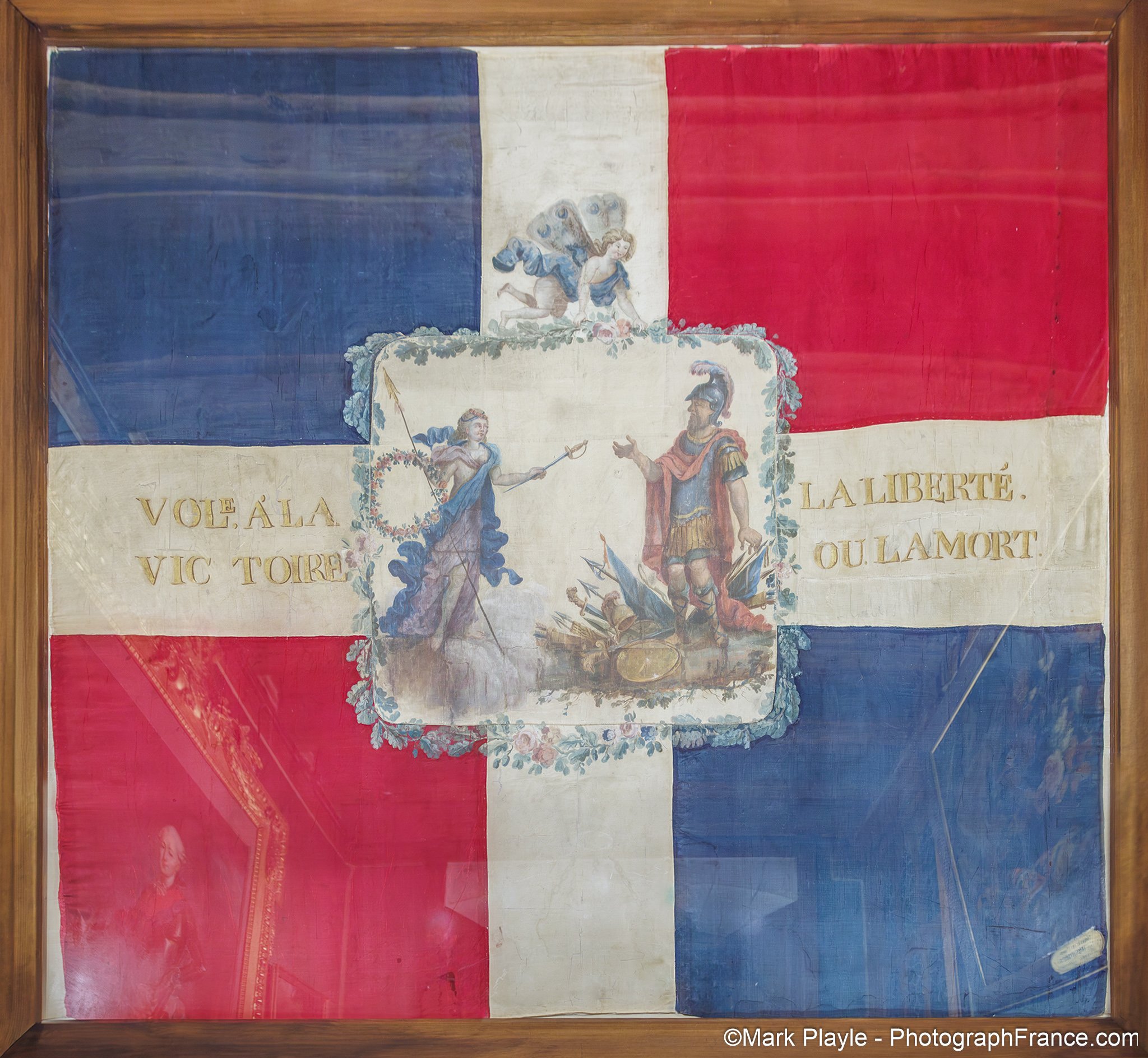
A very rare ceremonial flag made by local women during the French Revolution was unveiled at the Museum of Art and History.
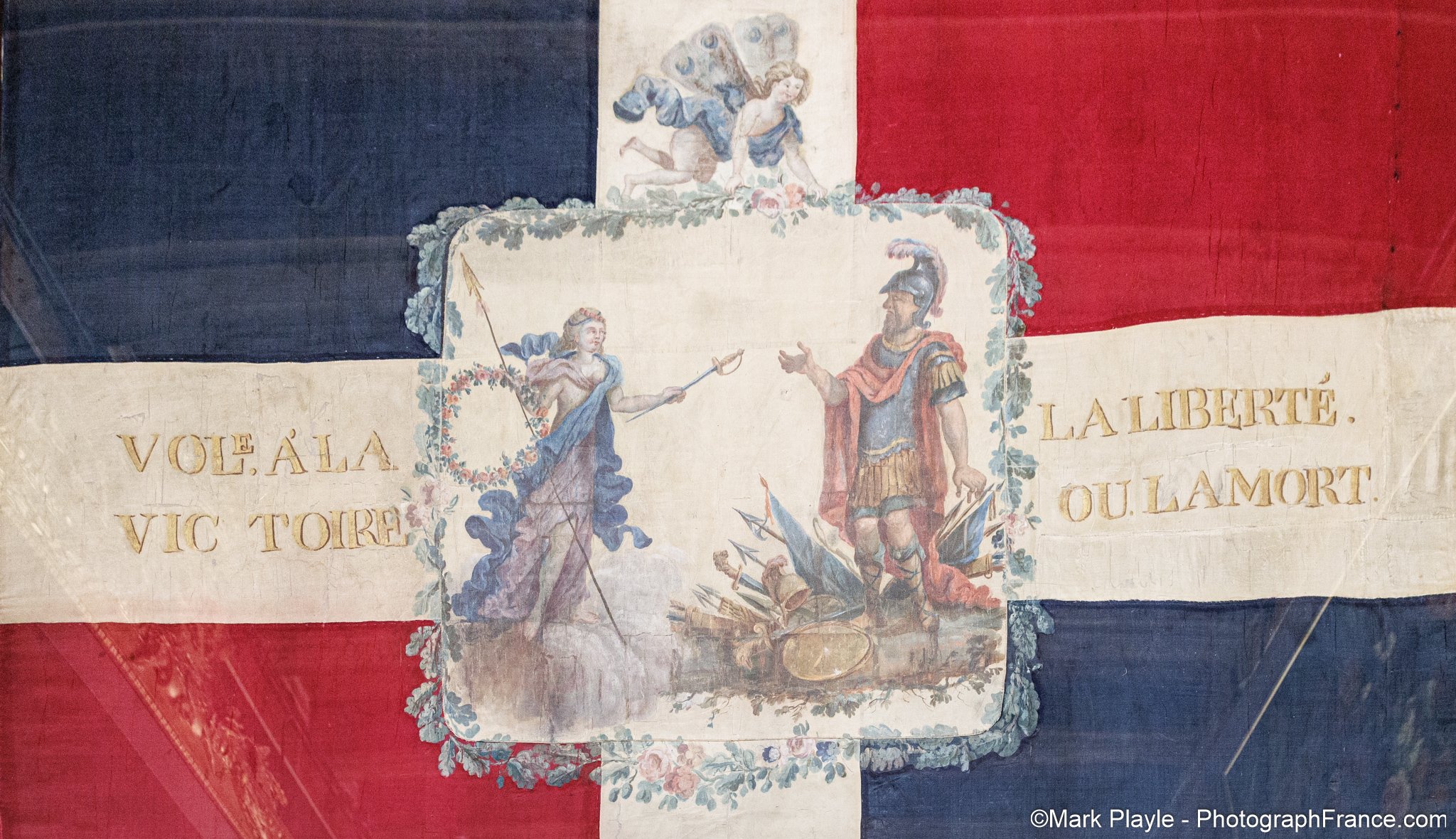
Two squares of pink (probably originally crimson) silk and two squares of blue silk are separated by strips of white silk. In the middle is a painting of a woman dressed in white, wearing the bonnet rouge (the symbolic red cap of liberty) holding a pike topped with the cap.
On the white cross-band, inscriptions read VOLE À LA VICTOIRE (Fly to Victory) on the left, LA LIBERTÉ OU LA MORT (Liberty or Death).
On the reverse DONNÉ PAR LES DAMES CITOYENNES D'AMBOISE 7 août 1791 below (donated by the women citizens of Amboise August 1791).
It was a poignant moment. We were re-living history, looking at something stitched almost two hundred and fifty years ago, right back in the middle of that uncertain, tumultuous time.
In August 1791 France was a Constitutional Monarchy but the Revolutionary slogan La Nation, la Loi, le Roi (The Nation, the Law, the King) is missing. The king is not mentioned because in June he was arrested as a traitor trying to flee France. This meant that plans for a cooperative monarch were dashed.
The fortuitous fact that it bears no references to royalty is the reason we can gaze on it today. When the king was executed in January 1793, local authorities across France were ordered to burn everything referring to royal insignia in public bonfires. The Amboise Flag was put away in an attic of the town hall and forgotten until its rediscovery in the 1970s. The intervening two hundred and thirty-five years meant that the fragile painted silk was in a very sorry state. Its painstaking conservation was funded (just as the Flag was in 1791) by public subscription (this time with the support of la Fondation du patrimony).
This very rare memento from Amboise from the Revolution is surely destined to be the star of the Museum.
The women made and presented the Flag to the local National Guard, volunteers of the 1st battalion in St. Denis.
Amboise was very proud of its National Guard made up of local tradesmen, shopkeepers, artisans and property owners. In 1791, following the mayhem in Paris, people were comforted by seeing Guards patrolling the streets.
1792 The ancient Convent of the Minimes founded in 1491 by Charles VIII was confiscated and sold. Hôtel Le Manoir Les Minimes, built on the convent foundations, was once a much loved Amboise landmark.
1793 St. Denis was renamed The Temple of Reason.
1793 The Royal Château of Amboise was confiscated and used as a prison
1793 Women's Clubs were banned.
1793/4 Streets with religious and royalist associations were renamed.
Rue des Minimes became rue de la Concorde. Rue Royale became Grande Rue, then rue Napoleon followed by rue Royale (return of the monarchy) and finally rue Nationale (collapse of the monarchy).
Amboise transitioned from a Revolutionary market town into a busy port of 4,000 to 5,000 inhabitants. Life revolved around river barges (gabares) hauling tuffeau stone, timber, and wine along the Loire, alongside stagecoaches rumbling along the road.
Everything changed in 1846 when the Paris-Orléans-Tours railway line arrived. Amboise became industrialised.
The town we know today emerged in the 1970s when traffic bypasses, pedestrianisation and heritage protection attracted tourists.
Post by Pamela (BA History of Art). Photography by Mark.

Explore the rich history of the Loire Valley in The Amboise Collection by Pamela Shields.
eBook, Paperback, Hardback
