
Marcel Duchamp. Master Chess Player.
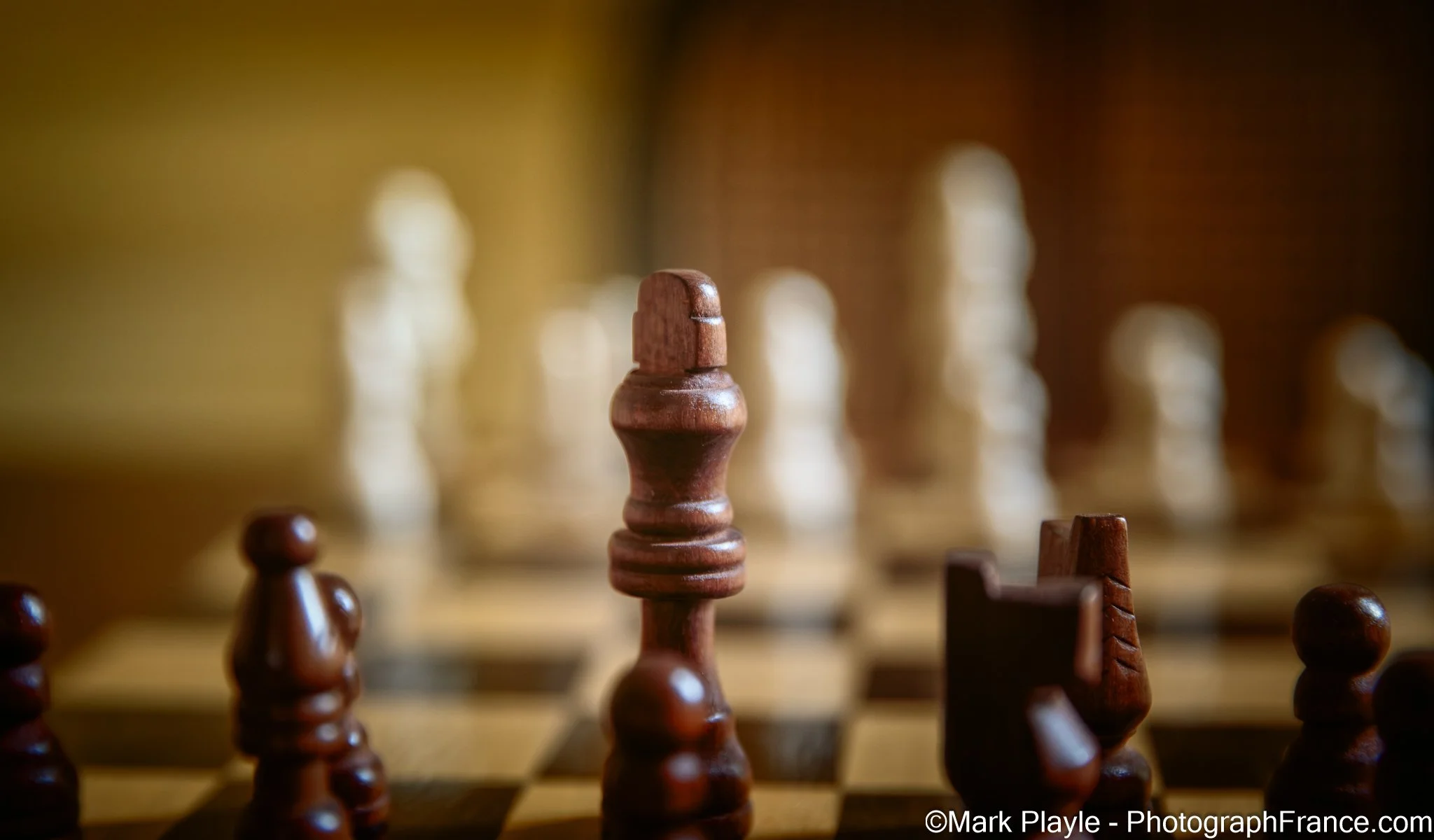
Chessboard, Château de Candé.
Duchamp's older brothers taught him how to play chess when he was growing up in Normandy. From that minute on, for Duchamp, there was no competition art v chess. He took his chess playing far more seriously than he ever took his art.
He said '...while all artists are not chess players, all chess players are artists'.
To commemorate his (139th!) birthday a huge live chess event was held in The Museum of Modern Art in New York.
Chess Grandmaster Susan Polgar took on fifty chess players from the art world, moving from board to board as spectators watched from the galleries.
Duchamp would have been ecstatic.
So would his chess opponent Max Ernst.
They became friends in Paris in 1922.
Duchamp is depicted in Ernst's painting Au Rendez-vous des amis, (Rendezvous of Friends). With him and Max is among many other leading lights, Louis Aragon, Jean Arp, André Breton, Giorgio De Chirico and Paul Éluard.
This was Max's favourite work. It was a pictorial, historical record commemorating his close friendship with all the main artists of the day.
In Jimmy Ernst (his son’s) memoirs he said that one day Max returned home from Paris, took the painting off the wall and sold it for a pittance to finance his divorce from Jimmy's mother.
It is now in a museum in Cologne worth millions.
Max and Marcel stayed close until WWII parted them.
They met up again in New York in 1941. Duchamp, Ernst, Man Ray, Alexander Calder and André Breton formed the core of the exiled European Surrealists.
Their lifelong close bond was built on a shared passion for chess, witty banter and a cynical view of the art world.
Duchamp spent his summers in France often staying with Max in his house at Huismes not far from Amboise.
You do wonder how good an opponent Max was. After all, Duchamp competed at international level representing France in four Chess Olympiads.
During one of his visits to Huismes, Duchamp recreated his infamous take on the Mona Lisa.
As a joke, someone had given Max a full size copy.
His wife said to Duchamp, "All she needs is a mustache."
Duchamp obliged and signed it "For Max and Dorothea, Marcel Duchamp 1960."
Today the art world owes a debt of gratitude to Duchamp for exhibiting a urinal in an art gallery.
Except for aficionados and the good folk of Amboise, proud custodians of his famous fountain, Max Ernst is barely remembered.
Post by Pamela (BA History of Art). Photography by Mark.

Max Ernst: and The Genie of Amboise
eBook, Paperback, Hardback
