
The Englishmen Who United the States of America
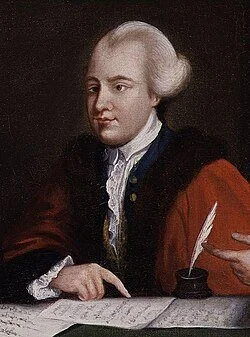
John Wilkes Portrait by Richard Houston, 1769
American Independence was fuelled by two Englishmen.
The first was John Wilkes, few in America have ever heard of.
In 1763, charged with seditious libel (criticising the King), he left for Paris where he lived for four years in Hôtel de Saxe, Rue du Colombier (now part of the chic Rue Jacob in the 6th arrondissement).
When he didn't show up for his trial, he was officially declared an outlaw.
His money ran out in 1768 so he decided to go home.
He won a landslide victory in his election as MP for Middlesex then surrendered to the authorities to serve his sentence in the King's Bench Prison. The House of Commons expelled him triggering a by-election. Wilkes ran again, and won again.
On May 10, 1768, 15,000 people gathered outside the prison. Deprived of their elected Member of Parliament they chanted No Taxation Without Representation.
Despite the government sending in troops who opened fire on the unarmed crowd, his constituents kept re-electing him while he was behind bars.
In the fourth election, Wilkes won again with an overwhelming majority against the government’s hand-picked candidate, Henry Luttrell. Parliament declared Luttrell the winner, just like in June 2026. Sir Keir Starmer PM won by a landslide but was replaced by a provincial mayor who received no votes.
Americans realised that the famous so called British justice was a myth. Disillusioned with the monarchy and the establishment, they took up the call No Taxation Without Representation.
When Wilkes served his time and was finally allowed his seat he stood up in Parliament and fiercely defended Americans right to resist taxation but it was left to Thomas Paine to cross the big pond to fight for their Independence.

Thomas Paine by Auguste Millière (1880) after an engraving by William Sharp (1792)
In 1774 Paine arrived with a letter of introduction from Benjamin Franklin. While the elites were politely petitioning for reform, Paine published Common Sense in plain easy to understand English attacking the very concept of monarchy. He took the argument about taxes and transformed it into a crusade for liberty.
Common Sense was the catalyst which escalated from a simmering grievance into a structured rebellion.
Before Paine, the prevailing sentiment was redress, not independence. Most Americans colonists saw themselves as British subjects fighting for their rights.
This is why Thomas Paine is called The Father of the American Revolution.
Don't take my word for it. Those words are inscribed on the base of his statue in New Jersey.
By the way, John Adams insisted Independence Day should be 2 July 1776, the day Congress officially approved a legal resolution declaring the colonies free and independent states.
Adams wrote to his wife: "The Second Day of July 1776, will be the most memorable Epocha, in the History of America. I am apt to believe that it will be celebrated, by succeeding Generations, as the great anniversary Festival... It ought to be solemnized with Pomp and Parade, with Shews, Games, Sports, Guns, Bells, Bonfires and Illuminations from one End of this Continent to the other from this Time forward forever more."
4 July was chosen because that was the day Congress formally approved Thomas Jefferson's Declaration of Independence. The printed document sent to the colonies was dated 4 July 1776.
John Adams and Thomas Jefferson died on the same day: 4 July, 1826 the 50th anniversary of the adoption of the Declaration.
Post by Pamela Shields.
Read more about John Wilkes and Thomas Paine in

