
Max Ernst and Surrealism
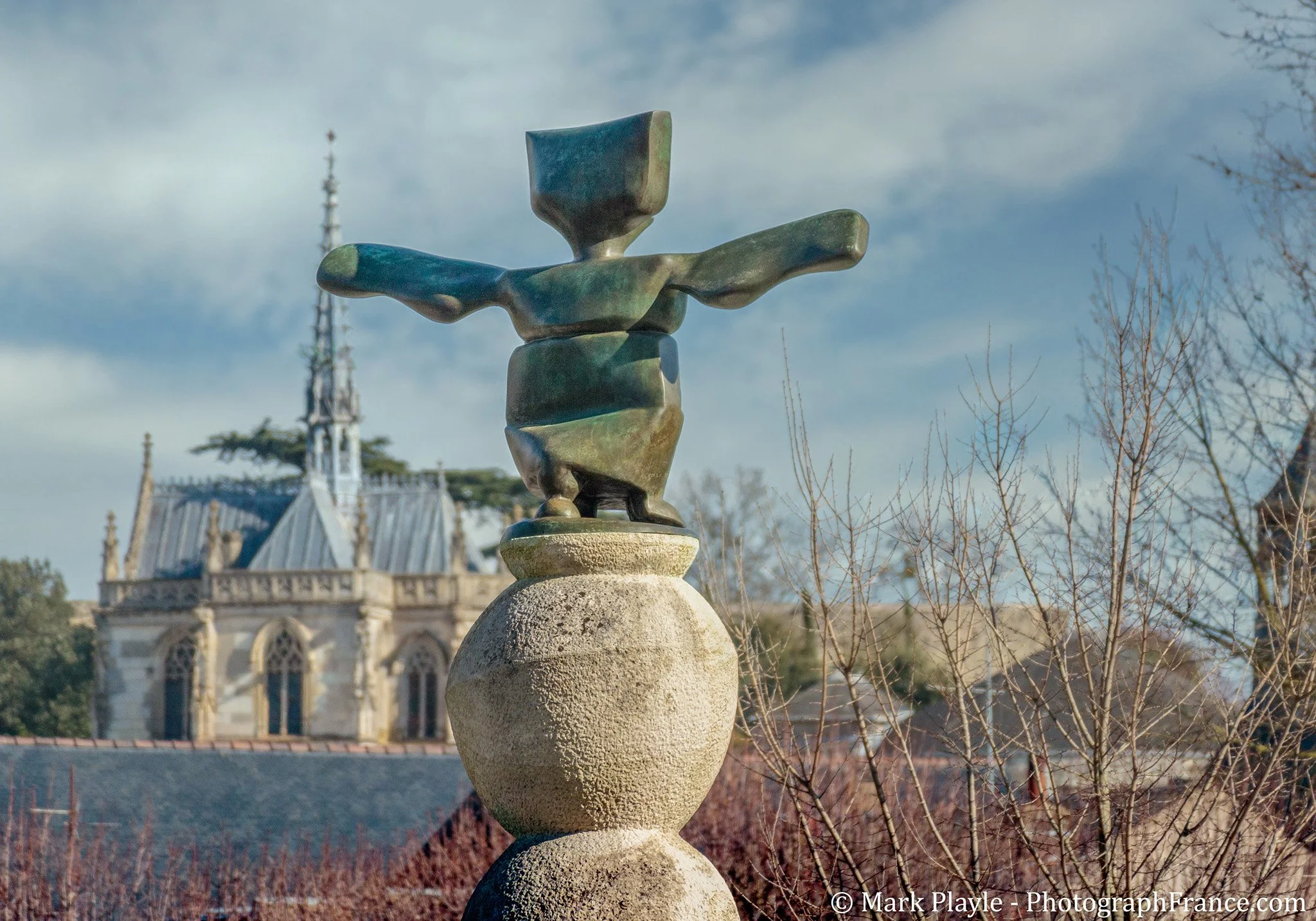
Max Ernst Fountain, Amboise. Mark Playle
Today, on his birthday, 2 April, we commemorate the man who designed the Surrealist Fountain in Amboise, France.
It's such an intriguing sculpture - no other word will do - I simply had to find out the story behind it using the ubiquitous writers tools of who, why, how and when.*
I knew a lot about Surrealism. It was on the curriculum for my degree in the history of art but there was a lot more I didn't know.
It was an adventure and a privilege to enter the world of Max Ernst. It was easy too. We visited his house in Huismes not far from Amboise.
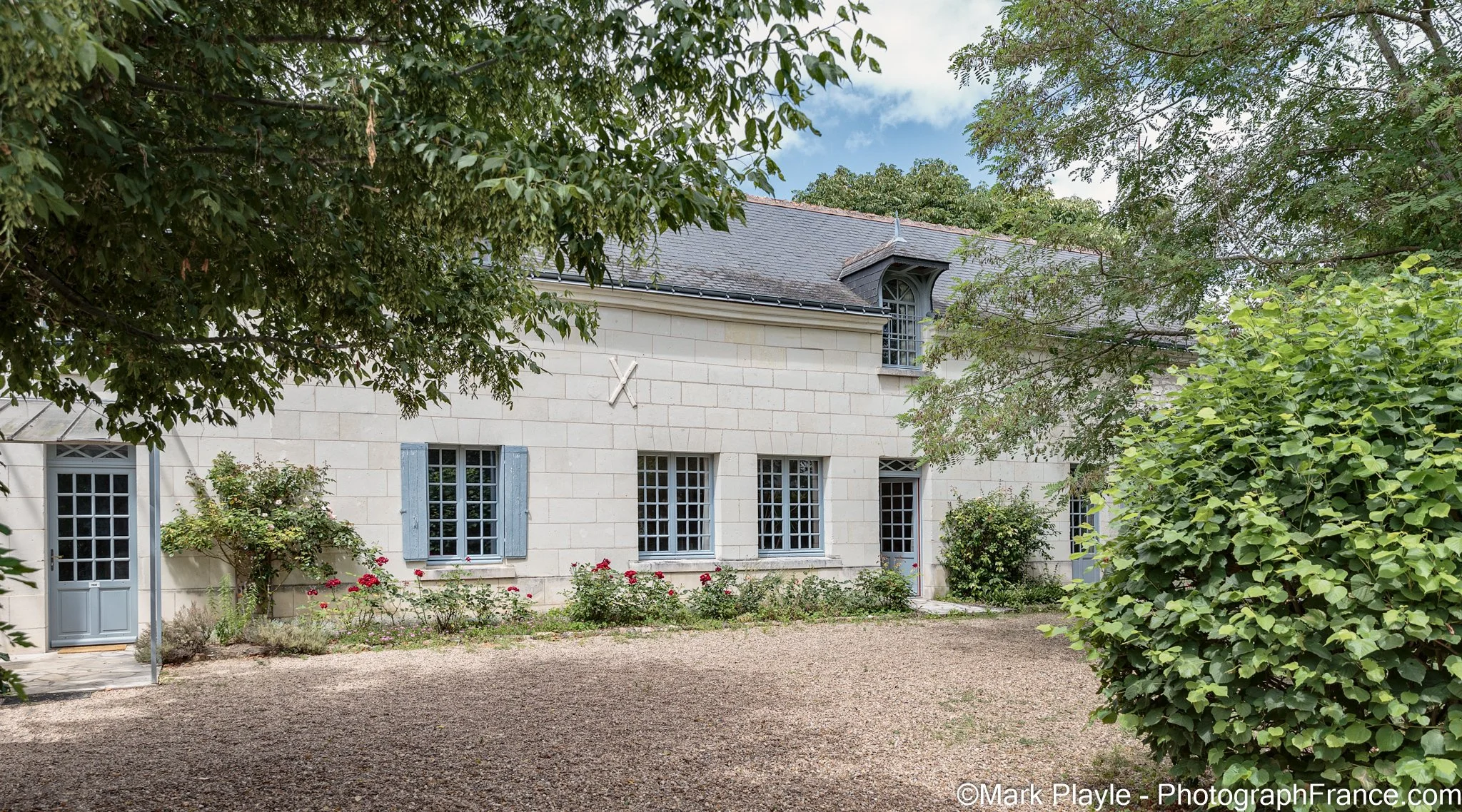
Max Ernst’s House, Huismes. Mark Playle
Many artists paint what they see. Max painted what he couldn't see. He looked at a floorboard and saw a forest. He looked at a grain silo and saw a monster.
What makes an artist? Any artist?
Max was born into a German household smelling of canvases, oil paints and turps. His father was a frustrated Sunday painter, a good one. It may be Max inherited a gene, the gene to create. The gene which, like a stone in your shoe, never lets you rest.
He enrolled at the University of Bonn in his late teens. This was in 1910. His Foundation Year included history of art, philosophy, psychology and psychiatry. Freud would have been on the curriculum.
Browsing in a book shop he came across a magazine featuring de Chirico's strange paintings and had what sounds like a sort of deja vu experience. He said : 'I had the feeling of recognizing something long familiar, as when a dream reveals to us a world we have already seen.'
Was de Chirico the first Surrealist artist?

The Enigma of an Autumn Afternoon. Giorgio De Chirico
No.
Why?
He wasn't a Surrealist. He despised them saying they were 'A group of degenerate, middle-class, pseudo-intellectuals..'
Ernst's next thunderbolt moment came in 1922 when Hans Prinzhorn, a psychiatrist at the University of Heidelberg, published Artistry of the Mentally Ill. Having spent years collecting thousands of works of art from psychiatric institutions across Europe he said mental patients possess a 'primordial creative urge'.
From that moment on, Ernst spurned the art world establishment saying 'If a mad man could produce a masterpiece without a single day of tuition, then art schools were frauds'.
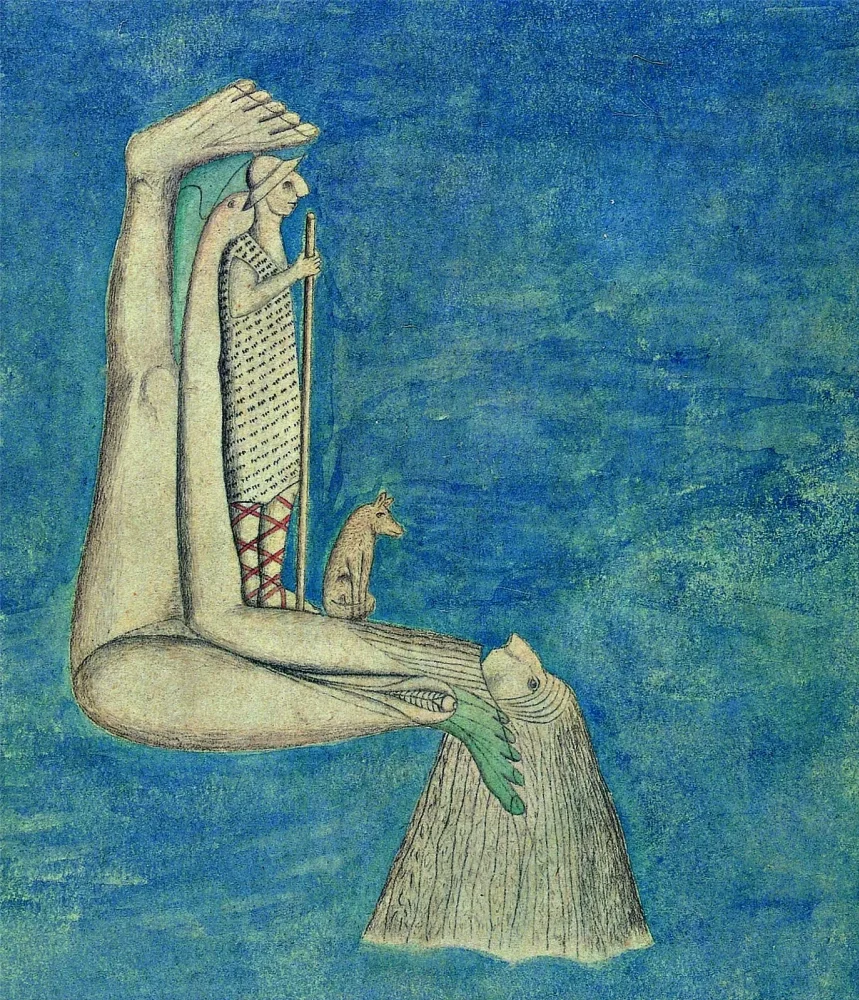
Unnamed August Natterer 1919
August Natterer, who suffered from schizophrenia, painted this in 1919. He didn't name it.
With the Surrealists in mind, I call it Nothing New Under The Sun.
Is Herr Natterer the first Surrealist artist?
No.
Why?
It was painted long before Surrealism was dreamed up. To be a Surrealist involved intent.
In 1924 Max was a founding member of Surrealist Group in Paris.
Was he the first Surrealist artist?
He said no, that was Leonardo da Vinci.
In 1937 Hitler mounted a 'Degenerate Art Exhibition’. He placed paintings by the mental patients next to paintings by Max and asked the public if they could tell the difference.
Ernst was delighted. He said his work came from the same primordial source as that of mental patients.
The patients were sent to gas chambers. Their paintings were hidden in the attics of Heidelberg University **
* Max Ernst and the Genie of Amboise
**1963 A Swiss artist organised an Exhibition of the Prinzhorn Collection. It caused a sensation. In 2001 The Museum Prinzhorn opened in Heidelburg University.
Post by Pamela Shields BA History of Art.
Read more about Max Ernst’s life and the Amboise Fountain.

Max Ernst and The Genie of Amboise
eBook, Paperback, Hardback
